Skip to content
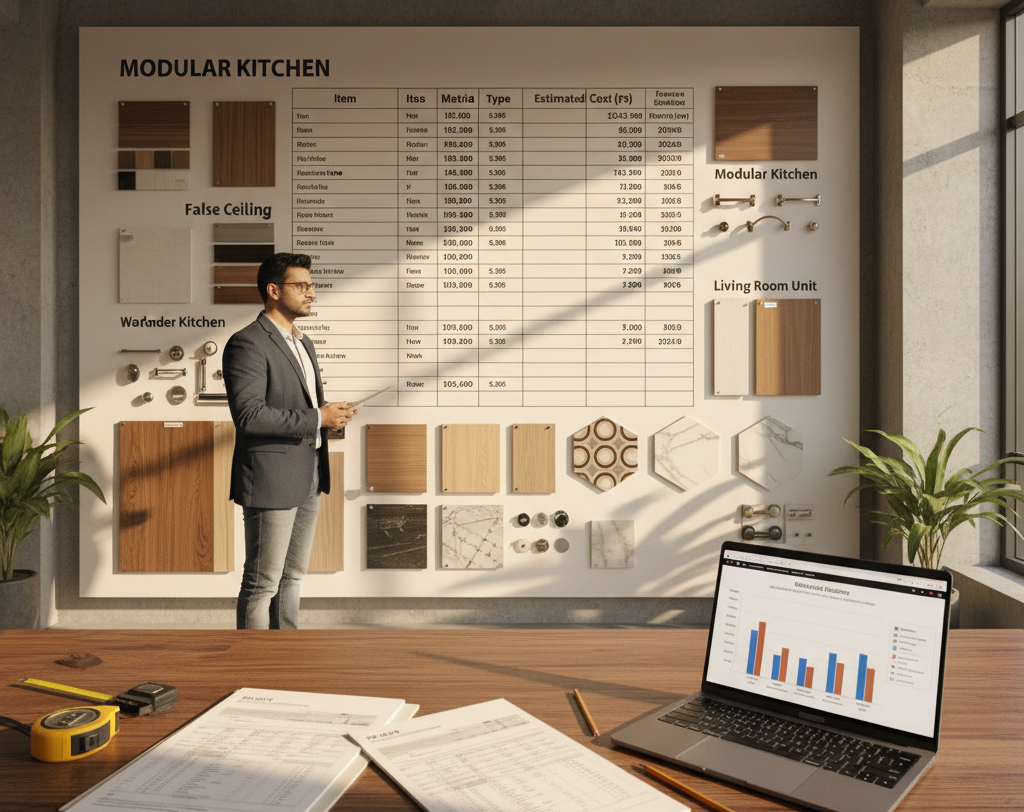
What’s New in 2025 Interior Pricing? Latest Trends, Finish Levels & Cost Changes
The interior design industry is evolving rapidly, and with it, the cost structure for home interiors is also shifting. The 2025 Interior Pricing Trends clearly indicate a rise in material prices, finish levels, labour costs, and new design expectations from homeowners—especially in cities like Ahmedabad and Gandhinagar, where modern apartments and premium residential projects are booming.
While the increase in interior costs may feel sudden, it is driven by a combination of market demands, global supply challenges, and lifestyle upgrades that homeowners now expect as standard. This detailed blog breaks down exactly what’s new in 2025, what affects pricing the most, and how homeowners should plan their budgets for turnkey interiors this year.
Understanding 2025 Interior Pricing Trends: What Changed This Year?
The earlier pricing structure depended mainly on carpentry work and modular kitchen costs. But in 2025, the scope of interiors has widened dramatically. Homeowners now want upgraded finishes, imported hardware, sustainable materials, mood lighting, and smart integrations—making interior design a more premium, detail-oriented service than ever before.
The 2025 Interior Pricing Trends show that interior design is no longer a simple cost-per-square-foot calculation. Instead, it involves materials, finish levels, execution intensity, technology, and personalized detailing.
1. Materials Are Driving the Biggest Cost Shift
Material cost—especially for wood-based items—has seen the highest inflation in 2025. Whether it’s plywood, laminates, veneers, or MDF/HDHMR boards, prices have climbed due to rising demand and restricted supply.
Why Material Prices Are Rising
Shortage of high-quality timber
Increased manufacturing and transport costs
Homeowners choosing premium finishes
Higher import duty on foreign hardware
Growing use of sustainable and eco-friendly materials
This shift directly impacts kitchens, wardrobes, TV units, panelling, and storage areas.
Material Cost Trend Table (2024 vs 2025)
| Material | Avg. Increase | Reason |
|---|---|---|
| BWP/BWR Plywood | 12–18% | Timber shortage, higher production costs |
| Laminates | 10–15% | More demand + transportation hikes |
| Veneers | 18–25% | Limited supply + premium category growth |
| Modular Hardware | 15–22% | Import duties + rising Euro/USD rates |
| Stone, Tiles & Marble | 8–12% | Fuel cost + quarry price increase |
Material cost is expected to continue rising for the next 12–18 months.
2. Labour Cost Has Increased for Skilled Work
Carpenters, polish workers, electricians, and POP experts are in high demand in Ahmedabad and Gandhinagar. More real estate projects and homeowners opting for turnkey interiors mean labour is costlier now.
Reasons for Labour Price Increase
Skilled labour shortage
Migration to metro cities
Higher cost of living
More technically complex designs
Increased finishing time due to detailed work
Finish levels have become more intricate, directly impacting labour intensity.
3. Finish Levels Are the Biggest Budget Decider in 2025
Unlike older pricing models, finish levels now heavily influence the total interior cost. From budget laminates to luxury veneers and PU finishes—each category has a different pricing structure.
Finish Level Comparison Table
| Finish Level | Category | Example Materials | Price Trend |
|---|---|---|---|
| Basic | Budget | Standard laminates | Low increase |
| Mid-Range | Popular | Premium laminates, PU matt | Moderate increase |
| High-End | Luxury | Veneer, PU gloss, fluted panels | Highest increase |
Homeowners leaning toward mid-range and high-end finishes contribute to citywide pricing changes.
4. Rise in Modular & Factory-Made Interiors
Another major contributor to the 2025 Interior Pricing Trends is the shift toward factory-made interiors.
Modular kitchens, modular wardrobes, CNC panels, lacquered panels, and factory-polished shutters have become the norm.
Why Factory-Made Interiors Cost More in 2025
Precision manufacturing
Branded hardware systems
Advanced shutter finishes
Better durability and warranty
Faster but more expensive production
The result is higher upfront cost but improved long-term value.
5. Lighting & Smart Home Integration Are Now Mainstream
In 2025, interior design is incomplete without ambient lighting, profile lights, smart fittings, and automated systems. Homeowners want:
Motion sensor lights
Warm + cool adjustable LED strips
Smart switches
Hidden cove lighting
Task lights in kitchens and wardrobes
Lighting now accounts for 8–15% of the total project cost—a noticeable jump from 2022–2023 allocations.
6. Global Economic Factors Influencing Indian Prices
Global changes are directly shaping interior pricing:
Higher freight charges
Currency fluctuations
International hardware cost increase
Imported veneer and stone becoming premium
Global timber supply shortage
This affects even local interior firms because materials like Hafele, Blum, Hettich, and imported veneer depend on global markets.
7. Real Estate Growth in Ahmedabad = Higher Interior Demand
Neighbourhoods like Shela, GIFT City, Shilaj, Chandkheda, South Bopal, and Science City are experiencing a rise in new apartments and villas. With higher occupancy, the demand for interiors has surged.
When demand increases faster than supply, cost increases are unavoidable.
Homeowners now want:
Customized storage
Seamless designs
Designer ceilings
Hotel-like bathrooms
Cozy aesthetics
Vastu-friendly layouts
This premium expectation naturally reflects in pricing.
8. Turnkey vs Contractor-Only Pricing Has Changed
Turnkey interior firms now offer:
3D visualization
On-site supervision
Warranty on work
BOQs
Fixed timelines
Professional project management
These add value but also raise the cost compared to hiring individual contractors.
Turnkey is still safer and more reliable, especially for busy homeowners—but more expensive than traditional methods.
What Homeowners Should Expect in 2025
General Pricing Positioning
| Category | Trend | What It Means |
|---|---|---|
| Budget Interiors | Mild increase | Laminate-focused finishes remain affordable |
| Mid-Range Interiors | 10–20% rise | Popular category with most demand |
| Premium Interiors | 20–30% rise | Veneer, PU, Italian marble costs growing |
| Luxury Interiors | 30–40% rise | Smart homes + premium materials |
The mid-range segment shows the steepest rise because it combines aesthetic upgrades with affordability, making it the most in-demand.
How Homeowners Can Smartly Manage 2025 Interior Budgets
Instead of cutting quality, homeowners can follow strategic steps:
Choose cost-effective materials
- Premium laminates instead of veneer in less-visible areas.
Prioritize essential rooms first
- Kitchen, wardrobes, and electricals always come first.
Avoid unnecessary decorative elements
- Fluted panels, CNC work, backlit walls—use sparingly.
Compare specifications, not just price
- A lower quote may hide cheaper materials.
Opt for modular mixed with custom carpentry
- A hybrid model gives the best of both worlds.
Work with turnkey firms for predictable budgets
- Turnkey reduces risk of unexpected expenses.
Conclusion: Interior Pricing in 2025 is Changing, But Planning Makes It Easy
The 2025 Interior Pricing Trends clearly show that the industry is moving toward smarter, refined, and premium interiors. Material costs, labour rates, finish quality, and growing lifestyle expectations have collectively shaped the new pricing landscape.
While costs are rising, good planning, professional guidance, and smart material selection help homeowners achieve beautiful, functional homes that match their lifestyle and budget.
Ahmedabad and Gandhinagar homeowners should approach interior design not as an expense—but as a long-term investment in comfort, convenience, and aesthetics.
Related Post

Ready To Transform Your Dream Space?
Get a free Consultation