Skip to content
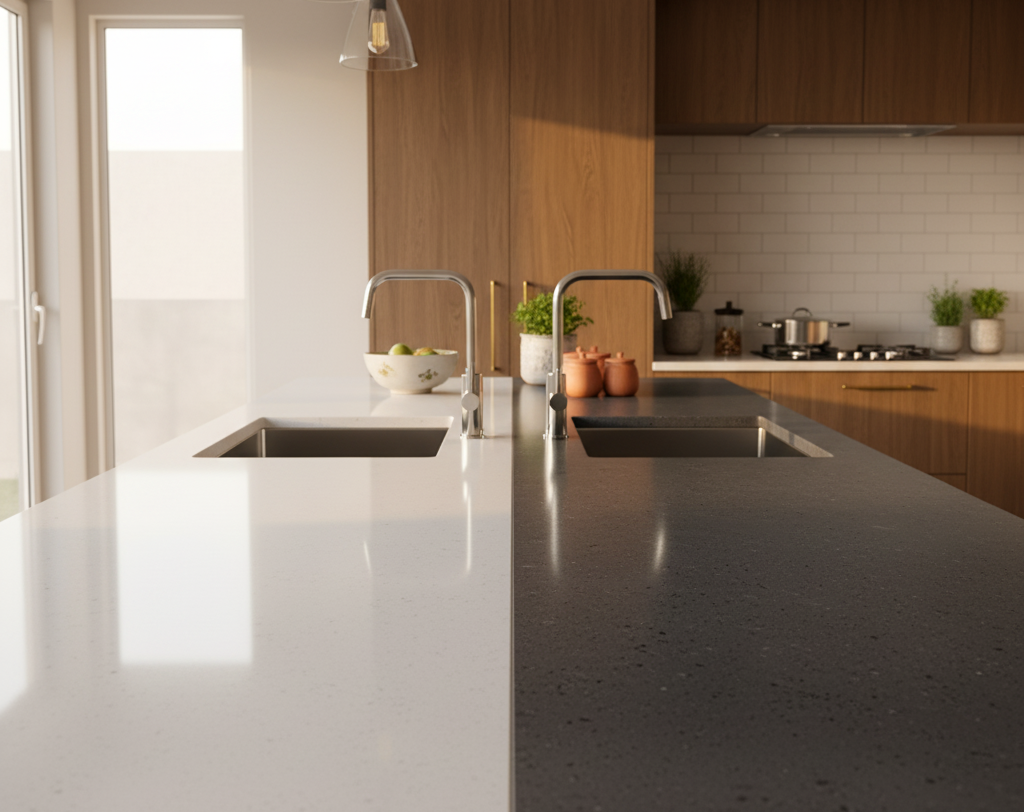
Quartz vs Sintered Stone: Which Will Dominate 2025?
The conversation around Quartz vs Sintered Stone has become one of the biggest debates in modern interior design, especially as homeowners, architects, and designers move toward durable, low-maintenance materials for kitchens, bathrooms, and premium interiors. While both materials look stunning and offer long-term performance, each has its own strengths, limitations, cost variations, and design advantages. With 2025 bringing new innovations, upgraded manufacturing standards, and rising customer expectations, the question becomes more relevant than ever: Which material will dominate in 2025—Quartz or Sintered Stone?
This blog breaks down everything you need to know—from durability tests and heat resistance to design flexibility and sustainability—so you can make a confident choice.
Understanding the Two Giants of Modern Surface Materials
Before comparing Quartz vs Sintered Stone in depth, it’s important to understand what each material actually is.
What is Quartz?
Quartz is an engineered stone made by combining:
Around 90–94% crushed natural quartz minerals
6–10% resins, polymers & pigments
This gives it a smooth, non-porous, and consistent surface. Quartz has been the most preferred material for kitchen countertops for nearly a decade because of its durability, appearance, and affordability.
What is Sintered Stone?
Sintered stone is created through sintering, where natural materials like minerals, silica, porcelain, and oxides are bonded under extremely high pressure and heat (similar to volcanic processes).
Unlike Quartz, it contains no resins, making it extremely heat-resistant, UV-resistant, and suitable for both indoor and outdoor use.
Brands like Dekton, Neolith, Lapitec, and now several Indian manufacturers have brought sintered stone into the mainstream in 2025.
Quartz vs Sintered Stone: Side-by-Side Comparison Table
| Feature | Quartz | Sintered Stone |
|---|---|---|
| Heat Resistance | Moderate — can burn with high heat | Extremely high — can handle hot pans directly |
| UV Resistance | Can fade in sunlight | Fully UV-resistant |
| Scratch Resistance | Very good but not perfect | Excellent — almost scratch-proof |
| Outdoor Use | Not recommended | Perfect for outdoor kitchens |
| Appearance | Consistent, glossy, elegant | Textured, matte, natural stone feel |
| Maintenance | Low | Ultra-low |
| Cost (India 2025) | ₹250–₹550 per sq. ft. (basic) | ₹350–₹900 per sq. ft. depending on brand |
| Seam Visibility | Less visible | Can be noticeable in large slabs |
Why Quartz Has Been a Favorite for Years
For nearly a decade, quartz has been synonymous with “modern luxury kitchen.” Here’s why:
1. Highly Consistent Looks
Perfect for homeowners wanting uniform patterns and premium glossy finishes that look like marble without the maintenance.
2. Great Price-to-Performance Ratio
Quartz offers high durability at a lower price bracket, making it ideal for modular kitchen budgets.
3. Non-Porous & Hygienic
The resin content makes quartz resistant to:
Stains
Oils
Spices
Water absorption
It is easy to wipe and maintain—another reason families love it.
4. Vast Color Range
From classic whites and greys to dramatic marble veins, quartz offers hundreds of shades.
Why Sintered Stone Is Becoming the New Hero of 2025
2025 has seen a dramatic rise in demand for sintered stone, especially in luxury homes, studio apartments, and commercial interiors.
1. Superior Heat Resistance
Sintered stone can handle direct heat from:
Hot pans
Coffee makers
Cooktops
Rolling chapati on a hot kitchen slab
This makes it a clear winner in Indian kitchens.
2. Stain & Scratch Proof Technology
Unlike quartz, sintered stone is almost impossible to scratch. Even a knife cannot leave marks.
3. Zero Resin = Zero Yellowing
Quartz can yellow over time, especially near windows.
Sintered stone does not fade, yellow, or discolor, even years later.
4. Outdoor Friendly
Perfect for:
Open balconies
Rooftop kitchens
Outdoor bars
Sunlit dining spaces
Quartz cannot be used outdoors due to fading issues.
5. Textured Natural Feel
With matte and stone-like finishes, sintered stone looks modern, high-end, and earthy—matching 2025’s minimal interior trends.
2025 Trends: Design Styles That Affect the Quartz vs Sintered Stone Choice
Trend 1: Matte Over Gloss
Sintered stone’s matte finish has become a major design trend.
Quartz is trying to catch up but still dominated by glossy finishes.
Trend 2: Seamless, Large Surfaces
Sintered slabs are available in huge formats—ideal for:
Full-height backsplashes
Large island countertops
Wall cladding
Bathroom shower walls
Quartz slabs are smaller, making seams more visible.
Trend 3: Outdoor Kitchens & Balconies
Because outdoor cooking, balcony dining, and grilling stations gained popularity in Ahmedabad in 2024–2025, sintered stone became the go-to material.
Trend 4: Minimal & Natural Interiors
Sintered stone’s raw stone textures complement:
Japandi
Minimalist
Scandinavian
Industrial interior styles
Quartz remains the favorite for classic or modern-luxury designs.
Performance Comparison (Real-World Testing)
Heat Test
Quartz: Slight burn marks if hot pans are placed
Sintered Stone: No discoloration or cracks
Scratch Test
Quartz: Resists scratches but not knife-proof
Sintered Stone: Knife-proof, tool-proof, extremely hard
Stain Test
Quartz: Resistant but reacts to harsh cleaners
Sintered Stone: Almost impossible to stain
Impact Test (Heavy Utensils Dropped)
Quartz: Can survive minor impacts
Sintered Stone: More rigid, can chip on extreme impact (rare)
Cost Comparison in India (2025 Updated)
| Material | Budget Range | Premium Range | Ultra-Luxury |
|---|---|---|---|
| Quartz | ₹250–₹450 sq. ft. | ₹450–₹650 sq. ft. | ₹650+ sq. ft. |
| Sintered Stone | ₹350–₹550 sq. ft. | ₹550–₹900 sq. ft. | ₹900+ sq. ft. |
Sintered stone is pricier, but the gap is reducing as more Indian manufacturers enter the market.
Pros & Cons of Each Material
Quartz: Pros
Affordable
Low maintenance
Elegant glossy finish
Great color options
Quartz: Cons
Not UV-resistant
Can chip under extreme heat
Can yellow over time
Sintered Stone: Pros
Extremely heat-resistant
UV-resistant
Scratch-proof
Matte, stone-like texture
Suitable for outdoor use
Sintered Stone: Cons
More expensive
Slightly more brittle during cutting
Requires skilled installation
Which Will Dominate 2025? Expert Opinion
Based on market trends, homeowner preferences, and material innovations:
Sintered Stone is expected to dominate premium and luxury interiors
because it offers:
Superior performance
Better durability
Natural, minimal look
Outdoor usability
UV + heat protection
Quartz will continue dominating the mid-range market,
because it remains affordable, consistent, and easy to maintain.
Final Recommendation: Quartz vs Sintered Stone
Choose Quartz if you want:
- Affordable modern interiors
- Glossy finishes
- Indoor usage only
- Maximum color variety
Choose Sintered Stone if you want:
- Future-ready material
- Matte natural luxury
- Outdoor or sunlit areas
- Maximum durability
- Heat + UV + scratch
- resistance
Related Post

Ready To Transform Your Dream Space?
Get a free Consultation