

Introduction
Commercial interior design plays a crucial role in shaping how a business functions and how clients perceive your brand. In today’s fast-paced corporate world, a commercial space is no longer just a place to work; it is a reflection of a brand’s DNA. Whether you are running a boutique startup, a sprawling corporate office, or a modern retail store, professional commercial interior design can improve productivity, employee retention, and brand identity.
If you are looking to revamp your workspace, Design Jadugar is a leading commercial interior design company offering modern, functional, and aesthetic workspace solutions.
👉 Visit our website: https://designjadugar.com/
Here are the top commercial interior design trends and ideas that combine functionality with high-end aesthetics.
1. Biophilic Design: Bringing the Outdoors In
One of the strongest trends in 2026 is Biophilic Design. This approach integrates natural elements into the built environment to reduce stress and improve air quality.
Key Features:
Living Walls: Vertical gardens that serve as a stunning focal point.
Maximizing Natural Light: Using smart glass and open layouts to let sunlight penetrate deeper into the floor plan.
Natural Textures: Incorporating raw wood, stone, and clay to create a grounded, organic feel.
2. Adaptive and Flexible Layouts
The “one-size-fits-all” office cubicle is a thing of the past. Modern businesses thrive on flexibility.
Key Features:
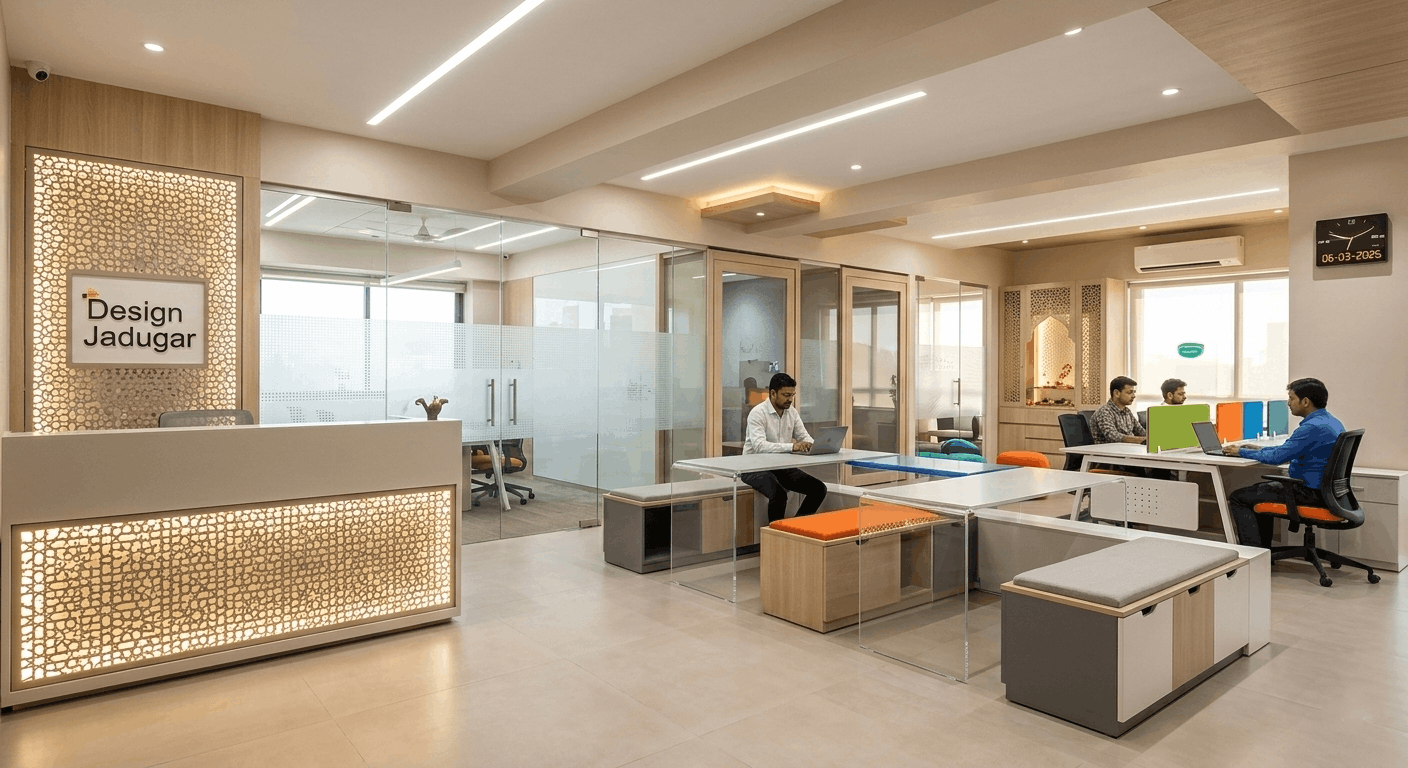
Modular Furniture: Desks and partitions on wheels that allow teams to reconfigure their space quickly.
Hot-Desking Zones: Unassigned seating areas that encourage collaboration.
Acoustic Pods: Soundproof pods for private calls and focused work.
3. Brand-Centric Aesthetics
Your office should tell your story the moment a client walks through the door.
Key Features:
Signature Color Palettes: Integrating brand colors into furniture and walls.
Interactive Lobby Displays: Digital screens showcasing company achievements and branding.
4. Industrial Chic with a Sustainable Twist
The industrial style is popular but now combined with sustainability.
Key Features:
Upcycled Materials: Reclaimed wood and recycled metals.
Exposed Architecture: Brick walls, open ceilings, and ductwork.
Energy-Efficient Technology: Smart lighting and HVAC systems.
Comparison: Traditional vs. Modern Commercial Design
| Feature | Traditional Design | Modern Commercial Design |
|---|---|---|
| Layout | Fixed Cubicles | Open & Flexible Zones |
| Lighting | Fluorescent Lights | Natural Light & Smart LEDs |
| Focus | Efficiency | Collaboration & Well-being |
| Technology | Desktop-Centric | Wireless & Smart Integration |
5. Prioritizing Employee Wellness
A healthy employee is a productive employee.
Key Features:
Ergonomic Workstations
Nap Rooms & Meditation Areas
Café-Style Breakrooms
External Reference (Outbound Link)
For more commercial architecture and workspace design inspiration, explore this industry reference:
👉 https://jsdl.in/DT-11IZ1S54GY5
Conclusion
Investing in commercial interior design is more than aesthetics—it is a strategic business decision that boosts productivity, improves employee satisfaction, and strengthens brand identity.
By blending Biophilic design with flexible layouts, Design Jadugar helps businesses create future-ready commercial spaces.
👉 Explore our commercial interior design services: https://designjadugar.com/
✅ Commercial Interior Design FAQ
1. What is commercial interior design?
Commercial interior design focuses on designing offices, retail stores, hospitals, hotels, and corporate spaces to improve functionality, aesthetics, and brand identity.
2. Why is commercial interior design important for businesses?
Commercial interior design improves employee productivity, enhances customer experience, and strengthens brand image.
3. How much does commercial interior design cost in India?
The cost depends on space size, materials, furniture, and design complexity. Basic designs are affordable, while luxury commercial interiors cost more.
4. What are the latest commercial interior design trends?
Top trends include biophilic design, flexible workspaces, smart technology integration, sustainable materials, and employee wellness spaces.
5. How long does a commercial interior project take?
Project duration depends on size and complexity, usually ranging from a few weeks to several months.
Related Post
Ready To Transform Your Dream Space?
Get a free Consultation